ChatGPT vs Claude vs Gemini - The 2026 AI Battle
ChatGPT GPT-5.2 vs Claude Opus 4.6 vs Gemini 2.5 Pro compared. Benchmarks, pricing, real-world tests, and honest picks for Feb 2026.
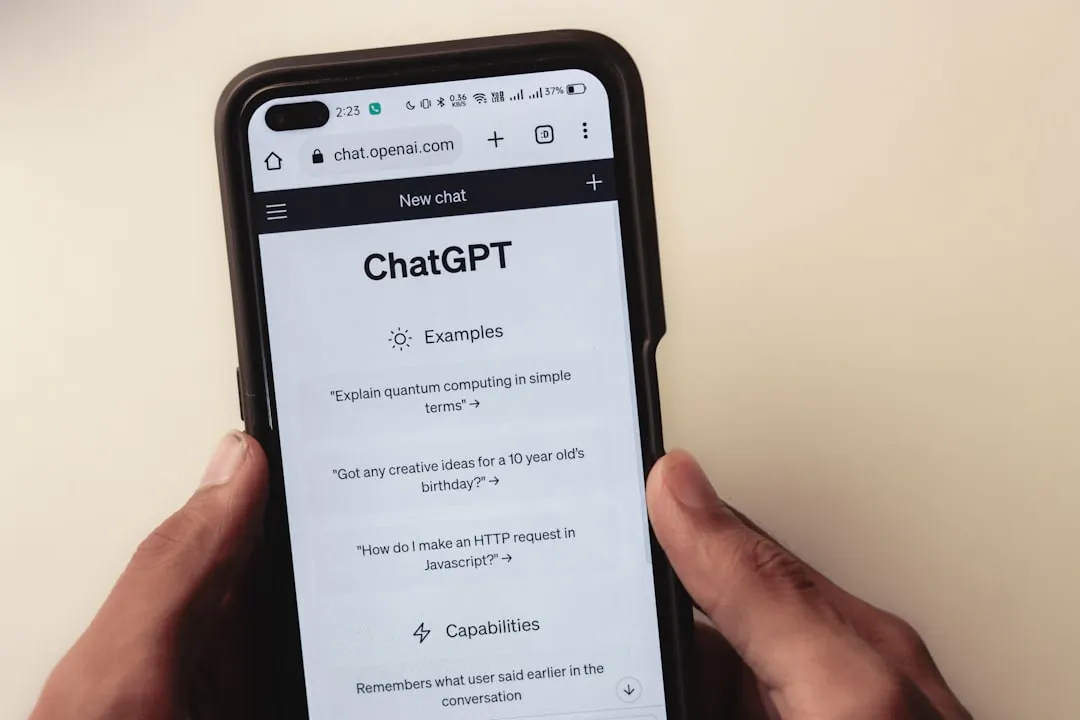
TL;DR - The Quick Verdict
No time for 3,000 words? I get it. Here is the cheat sheet.
| Category | Winner | Runner-Up | The Short Version |
|---|---|---|---|
| Writing | Claude | ChatGPT | Claude "writes with a bit more soul" |
| Coding | Claude | ChatGPT | SWE-bench: 80.8% vs 80.0% |
| Research | Gemini | ChatGPT | Deep Research is genuinely transformative |
| Multimodal | Gemini | ChatGPT | Native vision + audio + video |
| Image generation | ChatGPT | Gemini | DALL-E still reigns |
| Math & reasoning | ChatGPT | Claude | o4-mini scores 99.5% on AIME 2025 |
| Free tier | Gemini | ChatGPT | Not even close |
| Speed | ChatGPT | Gemini | Roughly 4x faster than Claude |
| Computer use | Claude | -- | 72.7% on OSWorld, no one else is close |
One-line picks: Claude for writing and coding. Gemini for research and free usage. ChatGPT for math, images, and raw speed. Power users? All three. Read on for why.
Last updated: February 8, 2026. The AI landscape moves fast -- we will update this comparison as new models, pricing changes, and benchmark results are released. Bookmark this page and check back monthly.
Key Specifications at a Glance
Before we dive deep, here is everything side-by-side.
| Spec | ChatGPT (GPT-5.2) | Claude (Opus 4.6) | Gemini (2.5 Pro) |
|---|---|---|---|
| Context window | 400K tokens | 200K (1M beta) | 1M tokens |
| Max output | 128K tokens | 128K tokens | Varies |
| SWE-bench Verified | 80.0% | 80.8% | 63.8% (stable) / 76.2% (3 Pro Preview) |
| GPQA Diamond | 93.2% (GPT-5.2 Pro) | -- | -- |
| AIME 2025 | 99.5% (o4-mini) | -- | -- |
| OSWorld | 41.2% | 72.7% | N/A |
| Consumer plan | $20/mo (Plus) | $20/mo (Pro) | $19.99/mo (AI Pro) |
| API input price | $1.75 / 1M tokens | $5.00 / 1M tokens | $1.25 / 1M tokens |
| API output price | $14.00 / 1M tokens | $25.00 / 1M tokens | $10.00 / 1M tokens |
| Response speed | Fastest (~4x Claude) | Slowest | Middle |
Why This Comparison Matters Right Now
Here is a question for you: when was the last time you felt completely confident recommending one AI chatbot over the others?
If your answer is "maybe 2023," congratulations, you have been paying attention. Because the truth is, in February 2026, the AI assistant landscape is a beautiful, chaotic mess -- and I mean that as a compliment.
Two years ago the conversation was embarrassingly simple. "Which AI should I use?" ChatGPT. Done. Maybe you had heard of Bard existing somewhere in Google's experimental purgatory. Maybe a developer friend had whispered the name "Claude" with a knowing look. But for 99% of people, AI chatbot meant ChatGPT.
Now look at what happened in the span of a single week. On February 5th, Anthropic dropped Claude Opus 4.6 -- a model that immediately claimed the top spot on coding benchmarks. OpenAI already had GPT-5.2 in the wild with a monstrous 400K context window. And Google's Gemini 2.5 Pro has been quietly running circles around both of them on research tasks with its 1M token context and 99.7% recall on the NIAH benchmark. Three heavyweights, all punching at championship level, all with genuinely different superpowers.
I have been using all three every single day -- sometimes running the same prompt through all of them just to see who nails it. And I am going to tell you something that might be frustrating: there is no overall winner. But there IS a clear winner for YOUR specific use case, and that is what this article is about.
If you are brand new to the AI tools space, you might want to start with our overview of Model Momentum first. For everyone else -- let's fight.
Meet the Contenders
ChatGPT -- The Popular Kid
You know ChatGPT. Everyone knows ChatGPT. Your mom knows ChatGPT. It is the AI that made "AI" a dinner table conversation, and in 2026 it is still the most-used chatbot on the planet by a massive margin.
The current flagship is GPT-5.2: a 400K context window with up to 128K output tokens. That is roughly a novel-length response if you ask for it. Alongside the main model, you get o3 for deep reasoning chains, o4-mini for blazing-fast math (99.5% on AIME 2025 -- essentially perfect), and the new Codex agent for autonomous coding tasks that run in a sandbox.
ChatGPT's image generation is still the best integrated option. Voice mode is polished. The plugin ecosystem is mature. The app works on every device. It is the Swiss Army knife of AI.
The vibe? ChatGPT is your enthusiastic coworker who always has an answer ready before you finish the question. Sometimes that speed leads to confident nonsense, but when it hits, it hits fast and clean. Response times are roughly four times faster than Claude on comparable prompts, which makes a real difference during rapid-fire work sessions.
Claude -- The Thoughtful One
If ChatGPT is the popular kid, Claude is the one who actually did the reading. Anthropic released Opus 4.6 on February 5th -- literally three days ago as I write this -- and it is a beast. A 200K context window standard (with a 1M beta for the daring), 128K output tokens, and benchmark scores that finally, definitively overtake GPT-5.2 in coding.
Claude also brought Agent Teams to the table: multiple Claude instances coordinating on complex projects like some kind of AI hive mind. And Sonnet 4.5 handles your everyday tasks without burning through your rate limits (more on that particular pain point later).
For a deeper look at what makes Opus 4.6 tick -- every feature, every tradeoff, every hidden cost -- see our Claude Opus 4.6 deep dive.
Here is the thing about Claude that numbers cannot capture. There is a reason 78% of professional developers prefer it for coding according to community surveys, and it is not just the benchmarks. Claude reads your entire prompt. It thinks about what you are actually trying to accomplish. It pushes back when your approach is flawed instead of obediently producing bad code. Some people find this annoying. Those people are missing the point.
The vibe? Claude is the friend who makes you feel slightly smarter after every conversation. It writes with nuance and genuine thoughtfulness. The developer community's favorite phrase about it -- "writes with soul" -- is a cliche at this point, but cliches become cliches because they are true. The trade-off? It is the slowest of the three -- noticeably so. If you need quick answers, you will feel the wait.
Gemini -- The Underestimated One
I will make a strong case for this: Gemini is the most underrated AI of 2026.
Here is my litmus test. Everyone I know who dismisses Gemini has not used Deep Research. Everyone who HAS used Deep Research quietly starts paying for Google AI Pro and does not talk about it, like it is some kind of competitive advantage they want to keep secret.
Gemini 2.5 Pro has a 1M token context window with 99.7% recall across that entire span. One million tokens. Near-perfect memory. You can dump an entire codebase, a 300-page legal document, or six months of Slack logs in there and Gemini will remember the throwaway comment on page 247 that turns out to be critical.
Then there is Gemini 3 Pro in preview (early benchmarks look promising), Deep Research (an autonomous agent that searches the web, reads dozens of sources, and writes structured reports with citations), and Deep Think for extended reasoning.
The vibe? Gemini is the quiet kid who aces the exam everyone else is cramming for. Integrated seamlessly with Gmail, Docs, Drive, and Search. But fair warning: it has a nasty habit of making things up with the confidence of someone citing a textbook. More on that shortly.
Head-to-Head: Four Arenas, Three Fighters
Round 1: Writing
I gave all three the same assignment: write a product launch email for a fictional SaaS startup. Same prompt, same constraints, same brand voice guidelines.
ChatGPT came back in about six seconds with something clean, professional, and aggressively forgettable. Every sentence was correct. Every paragraph was structured properly. It was the email equivalent of a hotel room -- functional, pleasant, zero personality.
Claude took maybe fifteen seconds longer and produced something that made me stop and re-read a line. Not because it was confusing -- because it was genuinely good. It found an angle I had not considered. It used a metaphor that actually landed instead of sounding like a LinkedIn post. The structure was tighter. The voice sounded human.
Gemini did something interesting: it pulled in a market data point I had not included in the prompt (correctly, as it turned out), which was impressive. But the prose itself read like it was written by a committee that had just attended a "Business Writing Best Practices" seminar. Bullet points where paragraphs should have been. Formal where casual was needed.
And this is not just my experience. In blind evaluation tests across writing communities, Claude consistently ranks first for coherence, voice consistency, and what people keep calling "naturalness." The GPT-5 series actually regressed on creative writing compared to GPT-4o -- which spawned an entire movement (see the community section below).
Winner: Claude. Not close. If you write for a living, this is your tool.
Round 2: Coding
Here is where the benchmarks get spicy, because the margins are razor-thin at the top.
| Benchmark | ChatGPT (GPT-5.2) | Claude (Opus 4.6) | Gemini |
|---|---|---|---|
| SWE-bench Verified | 80.0% | 80.8% | 63.8% (2.5 Pro stable) |
| Terminal-Bench 2.0 | 58.1% | 65.4% | 52.3% |
| OSWorld (Computer Use) | 41.2% | 72.7% | N/A |
A note on Gemini's SWE-bench scores: You may have seen the 76.2% figure floating around -- that comes from Gemini 3 Pro (Preview), not the stable 2.5 Pro release. The stable Gemini 2.5 Pro scores 63.8% on SWE-bench Verified. The preview number is impressive but it is not what you get in the generally available product today.
SWE-bench at the top is a dead heat -- 80.8% versus 80.0% is barely a rounding error. But look at Terminal-Bench 2.0 (multi-step terminal tasks): Claude at 65.4% versus ChatGPT at 58.1%. And OSWorld (can the AI actually use your computer -- click buttons, navigate GUIs, run terminal commands): Claude at 72.7%, ChatGPT at 41.2%, Gemini does not even compete.
In day-to-day use, the difference shows up in moments like these. You tell Claude "refactor this to be more maintainable" and it actually refactors -- pulls out functions, renames variables for clarity, restructures the logic. ChatGPT tends to just... reformat. Clean, but not rethought.
That said, ChatGPT's Codex agent is seriously impressive for well-defined autonomous tasks. And for quick utility functions, regex patterns, or "write me a script that does X," ChatGPT's speed advantage matters a lot. When you need a quick answer, waiting 30 seconds instead of 8 starts to grate.
Gemini? Great for reviewing large codebases thanks to the 1M context window. Terrible at writing code that uses real APIs. As one Reddit commenter memorably put it: "Gemini invents APIs with conviction." Not deprecated APIs. Completely fictional ones. You will spend twenty minutes debugging before you realize the function it told you to call was never real.
Winner: Claude. The benchmarks confirm what the community already knew. For serious development work, Opus 4.6 is the best model available right now. If you want to see how these models perform inside dedicated coding tools, our Cursor vs Copilot vs Claude Code comparison goes deep on that question.
Round 3: Research
This one is not even fair, honestly.
Gemini Deep Research takes your question, generates a multi-step research plan, autonomously searches the web, reads and cross-references dozens of sources, and produces a structured report with proper citations. It does not just search -- it thinks about what to search NEXT based on what it already found.
I tested all three by asking them to research the competitive landscape for AI-powered video editing tools (timely, given our Sora vs Runway vs Pika comparison). ChatGPT gave me a decent summary with some web browsing. Claude gave me a beautifully written analysis with less breadth. Gemini produced a 4,000-word report with 23 cited sources, market size estimates, and a competitive matrix I could have dropped into a strategy deck untouched.
One reviewer nailed the description: "Deep Research moves Gemini from chatbot to junior analyst." That is exactly what it feels like. It is not answering questions -- it is conducting research.
On the quantitative reasoning side, it is worth noting how ChatGPT's specialized models perform here. GPT-5.2 Pro scores 93.2% on GPQA Diamond -- a graduate-level science benchmark covering physics, chemistry, and biology -- placing it well ahead of the competition on expert-level scientific reasoning (source: OpenAI GPT-5.2 announcement). And o4-mini hits 99.5% on AIME 2025 (source: OpenAI o4-mini technical report), which is essentially perfect on competition-level math. If your research involves quantitative or scientific analysis, ChatGPT's reasoning models are in a league of their own.
And that 1M token context with near-perfect recall means you can feed Gemini an entire repository, a full book, or months of meeting notes and ask it questions about anything in there. Claude's 200K (or 1M beta) and ChatGPT's 400K are substantial, but Gemini's recall accuracy at scale is measurably superior.
Winner: Gemini. Deep Research is the single most underrated feature in AI right now.
Round 4: Multimodal
| Capability | ChatGPT | Claude | Gemini |
|---|---|---|---|
| Image understanding | Excellent | Very good | Excellent |
| Image generation | Excellent | None | Good |
| Video understanding | Good | Limited | Excellent |
| Audio processing | Good | Basic | Excellent |
| Computer use | Limited | Excellent (72.7%) | None |
Gemini was born multimodal. Vision, audio, and video are not bolted-on features -- they are baked into the architecture. Upload a YouTube video and it understands the visuals, the speech, and the text overlays simultaneously. Neither ChatGPT nor Claude can match this.
But ChatGPT dominates image generation. DALL-E integrated into the chat produces the best AI-generated images of any chatbot. If you need to create visuals from text, this is the clear choice.
And Claude owns a category nobody else seriously competes in: computer use. At 72.7% on OSWorld, Claude can literally operate your browser and terminal autonomously. It clicks, scrolls, types, navigates -- and it does it surprisingly well.
Winner: Gemini for overall multimodal. ChatGPT for image generation and math. Claude for computer use.
Pricing Breakdown (February 2026)
Let's talk money. This is simpler than you would expect.
Standard Plans
| ChatGPT Plus | Claude Pro | Google AI Pro | |
|---|---|---|---|
| Price | $20/month | $20/month | $19.99/month |
| Flagship model | GPT-5.2 | Opus 4.6 | Gemini 2.5 Pro |
| Context window | 400K | 200K (1M beta) | 1M |
| Max output | 128K tokens | 128K tokens | Varies |
| Image generation | Yes | No | Yes (limited) |
| Web search | Yes | Yes | Yes + Deep Research |
| Rate limits | Moderate | Strict | Generous |
Basically the same price for all three. The differences are in what you get for that $20.
Premium Plans
| ChatGPT Pro | Claude Max | Google AI Ultra | |
|---|---|---|---|
| Price | $200/month | $200/month | $249.99/month |
| Key perk | Unlimited o3/o4-mini, Codex | 20x rate limits, Agent Teams | Unlimited Deep Research, 3 Pro preview |
| Who needs this | Heavy math/reasoning users | Developers who hit limits daily | Enterprise researchers |
API Pricing
If you are building on top of these models, the cost picture shifts significantly.
| GPT-5.2 | Claude Opus 4.6 | Gemini 2.5 Pro | |
|---|---|---|---|
| Input | $1.75 / 1M tokens | $5.00 / 1M tokens | $1.25 / 1M tokens |
| Output | $14.00 / 1M tokens | $25.00 / 1M tokens | $10.00 / 1M tokens |
Gemini is the cheapest option for API usage by a comfortable margin -- roughly 30% less than GPT-5.2 on input and output. Claude Opus 4.6 is the most expensive, costing nearly 3x Gemini on input and 2.5x on output. That gap matters at scale. If you are processing millions of tokens per day, the difference between Gemini and Claude could be thousands of dollars monthly. Something to factor in if you are building production applications rather than just chatting.
The Free Tier Reality
This matters more than the premium tiers, because this is where most people start.
Gemini wins free tier by a landslide. You get Gemini 2.5 Pro (with limits), some Deep Research access, web search, and full Google ecosystem integration. It is genuinely useful without paying a cent.
ChatGPT free gives you GPT-4o-level access with limited messages. Fine for casual use. You will hit the wall quickly with heavy usage.
Claude free... exists. You get Sonnet 4.5 with tight limits. Really tight. More of a taste test than a daily driver.
What Real Users Say (The Unfiltered Version)
The official marketing tells one story. Reddit at 2 AM tells another. Here is what is actually happening in the communities.
ChatGPT: The #Keep4o Revolt
This might be the wildest AI community drama of 2026. When GPT-5 rolled out as the default, users revolted. A Reddit post titled "GPT-5 is horrible" hit 3,000 upvotes. The core complaint? GPT-5 felt "dumbed down" for everyday conversational tasks compared to GPT-4o. Technically more capable on benchmarks, subjectively worse for creative writing, casual conversation, and nuanced work.
This spiraled into the #Keep4o movement. A petition gathered 13,000 signatures on Change.org. And here is the part I am still not over: people physically showed up at OpenAI's headquarters with protest signs demanding the return of the old model. For an AI model. In person. In San Francisco.
OpenAI's response was GPT-5.2, which addressed many of the regressions. But the trust damage was real. And the platform's reliability has not helped -- community trackers on OpenAI Status logged 61 incidents over the past 90 days. That is roughly one outage or degradation event every 36 hours.
Claude: The Rate Limit Saga
Ask any Claude user what drives them up the wall and you will get a one-word answer: limits.
On the $20/month Pro plan, heavy users report hitting the rate cap in 10-15 minutes of intensive coding work. Fifteen minutes. Let that sink in. You are deep in a debugging session, things are flowing, and then -- wall. "You've reached your usage limit. Please try again later."
This is the eternal Claude paradox. The model is so good you want to use it for everything. The limits mean you literally cannot. It is like having a sports car with a 30-mile daily driving cap.
The $200/month Max plan exists partly to fix this, and developers who upgrade report a dramatically better experience. But "pay 10x more to actually use the thing" is a hard pitch for most people.
The love, though? That is real. The developer preference is not marketing spin. Visit any coding Discord or Hacker News thread asking for AI coding recommendations. Claude is the default answer, delivered with an almost evangelical enthusiasm. "It writes with soul" appears in so many threads it has become a meme -- but they mean it.
Gemini: The Trust Problem
Gemini's biggest issue is not capability. It is trust.
When Gemini is right, it is spectacular. Deep Research produces analysis that makes you wonder why you ever paid a research analyst. The 1M context window lets you work with datasets that would crash the other models.
When Gemini is wrong, it is wrong with the serene confidence of a tenured professor citing a source that does not exist. The API hallucination problem is legendary in developer circles. Gemini will reference methods, parameters, and entire libraries that are completely fictional -- and it will format the code beautifully, add helpful comments, and explain in detail why this imaginary function works the way it does. You will spend half an hour debugging before you realize the entire foundation was fabricated.
Google has improved this considerably with Gemini 2.5 Pro, especially when Deep Research mode is engaged (because it cites actual sources). But the reputation sticks, and for good reason.
The Triple Stack: Why Power Users Pay $60/Month for All Three
Here is the open secret of the AI power user community: you do not have to pick one.
The Triple Stack -- ChatGPT Plus + Claude Pro + Google AI Pro -- runs about $60/month. That is roughly two fancy coffees a week. And for knowledge workers, the productivity math works out immediately.
Here is how it plays in practice:
Morning research: Start with Gemini Deep Research. Get a comprehensive, cited landscape of whatever you are investigating. Let it build the foundation with real sources, not vibes.
Execution phase: Hand Gemini's research to Claude. Write the actual thing -- the blog post, the report, the strategy deck, the codebase. Claude turns raw material into output you are proud to put your name on.
Quick tasks throughout the day: ChatGPT. Need a regex? ChatGPT (4 seconds). Image for a presentation? ChatGPT. Quick math check? o4-mini. Explain a concept to a non-technical stakeholder? ChatGPT. Its speed makes it the ideal rapid-fire assistant.
Deep coding session: Start with Claude for architecture and complex logic. Use ChatGPT Codex for boilerplate and utility functions. Dump an unfamiliar codebase into Gemini's 1M context window to get oriented.
Is it overkill for everyone? Yes, absolutely. But once you experience using the right tool for each task instead of forcing a single tool to be mediocre at everything, going back feels like working with one hand tied behind your back.
Which One Should You Pick?
Let me make this personal.
You write for a living (marketing, content, copywriting, journalism): Claude Pro. The writing quality gap is not subtle. It is the difference between "passes the test" and "genuinely engaging." If you also need image generation, add ChatGPT Plus as your secondary tool.
You code professionally: Claude Pro, no question. The benchmarks confirm it, the community confirms it, and daily use confirms it. For quick scripts and prototyping, ChatGPT is a great complement thanks to its speed.
You do research, analysis, or academic work: Gemini is your primary tool. Deep Research alone justifies the subscription. Supplement with Claude when you need to write up your findings in prose that actually reads well.
You want one subscription and the best all-rounder: This is the hardest call. If forced to pick exactly one... ChatGPT Plus. Not the best at anything, but good at everything. Image generation, speed, voice mode, browsing, the largest ecosystem. The safest single bet.
You are on a budget: Gemini free. It is the most capable free tier by a wide margin. Add Claude's free tier for writing tasks when you need it. You can get surprisingly far without paying anything.
You want the best possible setup and $60/month is fine: The Triple Stack. Use each tool for its strength. Never look back.
FAQ
Which AI hallucinates the least?
In my experience, Claude hallucinates the least on general knowledge and writing tasks -- it is more likely to say "I'm not sure" than invent an answer. ChatGPT hallucinates less on factual queries when it has web browsing enabled. Gemini hallucinates the most, especially with code and technical details. However, Gemini's Deep Research mode (which cites sources) dramatically reduces this problem for research-specific tasks.
Is the $200/month premium tier worth it?
It depends entirely on your workflow. If you are a developer who hits Claude's rate limits multiple times a day, the $200 Max plan pays for itself in the first week through recovered productivity. If you rely on ChatGPT's o3/o4-mini for heavy reasoning or research, the Pro plan makes sense. For most people, the $20 standard tier is more than enough. Start there. Upgrade only when the limits genuinely slow you down.
Can I use these for confidential or sensitive work?
All three offer enterprise tiers with explicit data processing agreements. On consumer plans: Anthropic and OpenAI let you opt out of training data usage. Google's data practices are more complex given their advertising model. For truly sensitive material (legal, medical, proprietary code), use enterprise or API tiers with formal agreements. Never paste confidential data into a free tier.
Why do developers overwhelmingly prefer Claude for coding?
Three reasons. First, consistency -- the same prompt produces reliably similar quality output across sessions. Second, instruction following -- Claude adheres to architectural patterns and coding standards more faithfully. Third, the extended thinking mode shows reasoning in real time, making it easier to catch and correct mistakes. The SWE-bench (80.8%) and Terminal-Bench (65.4%) scores back up what developers experience daily.
Is Gemini's 1M context window actually useful in practice?
Yes, genuinely. With near-perfect recall across the full million tokens, Gemini processes and references information without losing track. Practical use cases: analyzing entire codebases at once, processing book-length documents, reviewing months of transcripts, researching across dozens of papers simultaneously. The caveat is speed and cost -- feeding 1M tokens through the API is neither fast nor cheap (though at $1.25 per 1M input tokens, Gemini is the most affordable of the three). Most users find the sweet spot around 200K-500K tokens per query.
Will one of these eventually replace the other two?
Unlikely in 2026, and probably not in 2027 either. The market is expanding, not consolidating. Each tool has carved out genuine competitive advantages that the others struggle to replicate. ChatGPT's ecosystem breadth, Claude's code and writing quality, Gemini's research depth and Google integration -- these are structural advantages, not temporary leads. Competition is fierce, and that is the best possible news for you as a user.
Final Thoughts: No Winner, and That Is Great News
If you are slightly annoyed that I did not crown a single champion, I understand. But hear me out -- the fact that there is no clear winner is literally the best thing that could have happened.
Rewind to 2023. OpenAI had a near-monopoly. Pricing was whatever they wanted. Features shipped on their schedule. Rate limits were whatever they decided was acceptable.
Today? Anthropic drops Opus 4.6 on a Wednesday and OpenAI feels the pressure by Friday. Google quietly builds Deep Research into something so good that analysts are switching in droves. Every time one company pulls ahead, the other two scramble to respond. Prices stay competitive. Features ship faster. Quality ratchets up in ways no single company could achieve alone.
Here is where things stand in February 2026:
- Claude Opus 4.6 is the best model for writing and coding. If those are your primary use cases, start here and do not look back.
- Gemini 2.5 Pro is the best research tool and the best free option available. Deep Research is transformative for anyone who synthesizes information for a living.
- ChatGPT GPT-5.2 is the best all-rounder: fastest responses, strongest math, most complete feature set. The safe choice that never embarrasses you.
The real winner of the 2026 AI battle? You. Because all three of these tools would have been science fiction five years ago, and today they cost less than your streaming subscriptions combined.
And if you want to squeeze the most out of whichever model you choose, our Prompt Engineering 101 guide covers platform-specific tips for all three.
Now close this tab and go build something.